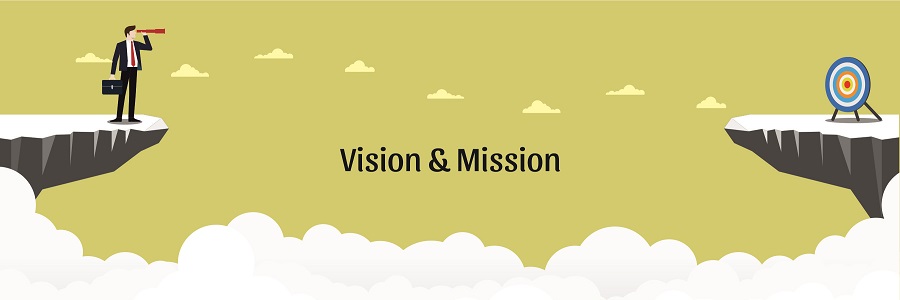
VISION

To produce excellent professionals, who will provide engineering solutions for infrastructure development and managing sustainable socio-economic advancement.
The department's vision is pursued with regards to the Institute’s vision, holistic dimensions and their objectives via four value-creation chains:
- Excellent professionals in infrastructure development
Students are nurtured into well-rounded civil engineering professionals capable of planning, designing, analysing, and delivering safe, sustainable, and resilient infrastructure systems. They are prepared with core foundations in structural engineering, geotechnical principles, transportation systems, environmental engineering, water resources management, and modern construction practices to contribute effectively for the essential public infrastructure.
- Sustainable socio-economic advancement
The department instils in students a strong sense of ethics and accountability in engineering practice. Emphasis is placed on designing structures that are safe, sustainable, and responsive to societal needs. By upholding high professional standards and considering the long-term impacts of their decisions, students become responsible engineers capable of working across multicultural environment.
- Ethical and societal responsibility
To develop graduates with effective communication skills, global awareness, and cross-cultural understanding, enabling them to collaborate and lead in diverse, multidisciplinary, and international environments.
- Provide engineering solutions to global standards
Students are encouraged to explore and apply innovative infrastructural engineering solutions to real-world problems through design thinking and simulation-based learning. They critically analyze complex scenarios and optimize structural designs to ensure safety, economy and high performance in line with internationally accepted engineering standards.
MISSION
Advancing innovative civil engineering solutions for society and creating leaders by integrating experiential education to face complex technical challenges.
Responsibly approaching the Institute’s role in the society and the significance of the created added-value, and taking into consideration the needs of stakeholders, the following missions are stipulated:
M1: Strong theoretical foundation and practical engineering skills
The department aims to cultivate academic excellence among students through a well-structured curriculum. This promotes a deep understanding of core structural behavior, design philosophies, and modern construction practices. Students are empowered to develop innovative and safe infrastructure solutions through experiential learning, use of advanced analysis tools, and project-based learning. The department strives to nurture confident and competent professionals who are equipped to address complex engineering challenges and deliver meaningful contributions to industry and society.
M2: Development of collaboration and leadership in infrastructural innovation
The department promotes leadership qualities and teamwork by engaging students in collaborative learning environments, industry interaction, and interdisciplinary projects. Emphasis is placed on addressing modern challenges in infrastructure development, such as urbanization, sustainability, and disaster resilience. Students are trained to lead and innovate in global structural safety standards and practical requirements.
M3: Critical reasoning, innovative research and ethical practice
The department nurtures engineers who uphold ethical conduct in design, construction, and professional practice. Students are trained to evaluate engineering decisions with critical reasoning while engaging in innovative research that advances sustainable and resilient infrastructure solutions.
M4: Encourage entrepreneurial thinking and community-driven solutions
Students are prepared to become entrepreneurs with a focus on sustainable development, safety, affordability, through community-driven solutions and scalable infrastructure designs by bridging theoretical advancements and practical implementations.









 Work with Us
 Campus Map
 How to Reach Us
 Online Degree Verification
 IARE Mail
 Photo Gallery
 Virtual Tour